
After the Storm: The Boom in Damage Restoration Services
Market Snapshot – Damage Restoration Services
Content of the study
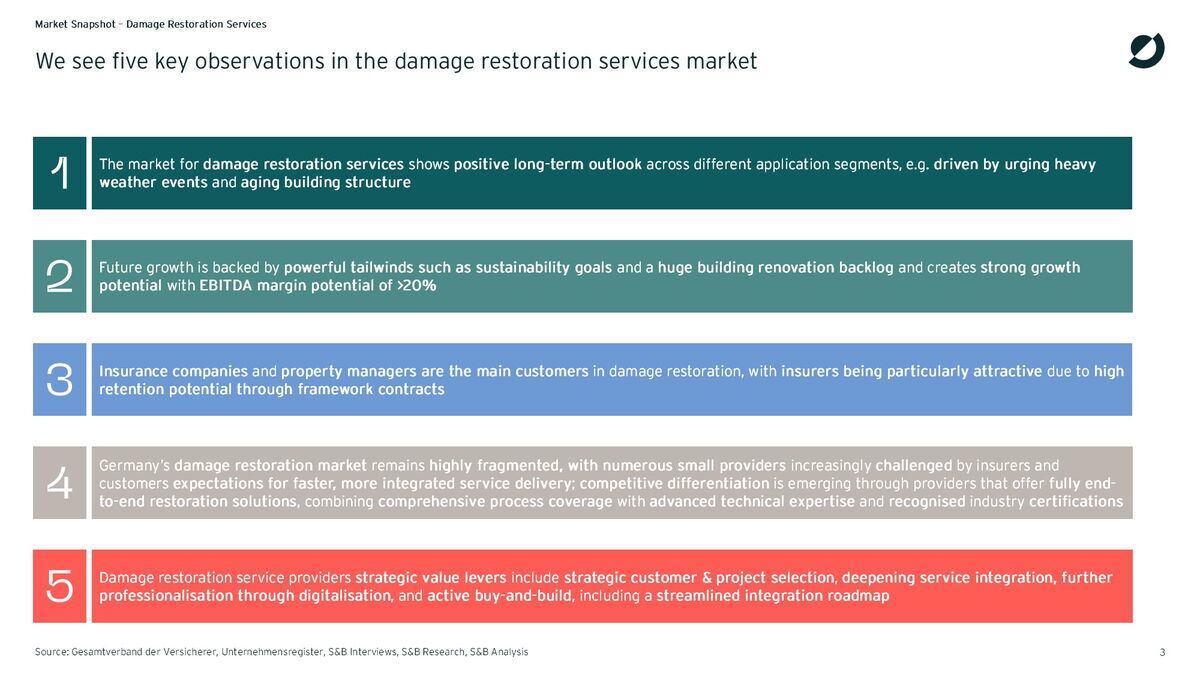
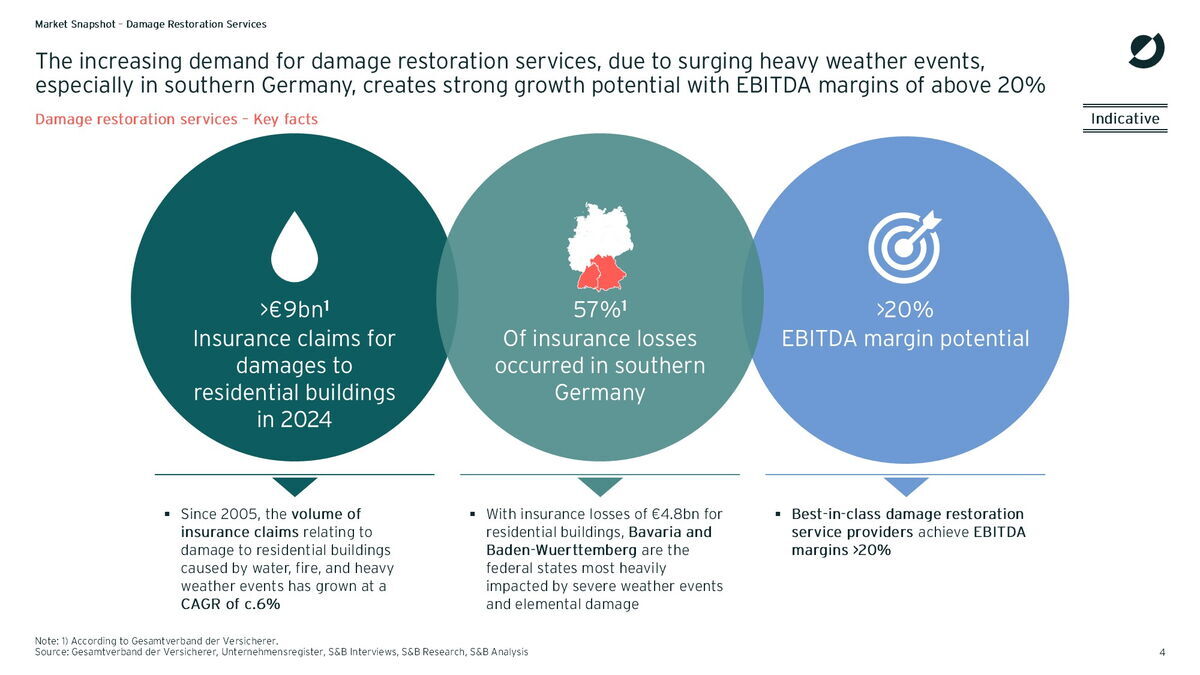
Damage restoration services in Germany are a growth market with two structural drivers: an ageing building stock in need of renovation and the increasing frequency of extreme weather events. Insurance claims for water and fire damage to residential buildings rose from €5.8bn in 2020 to €9.5bn in 2024. We expect further growth of c.5% p.a. until 2030, before taking natural disasters into account. Southern Germany accounts for 57% of insurance losses, €4.8bn of which fall on Bavaria and Baden-Württemberg alone.
Insurers and property managers are the key customers. They need fast, certified restoration to limit downtime and liability risks. Insurers secure response times and pricing through framework agreements, which gives providers a stable, insurance-funded flow of cases. Leading providers stand out through end-to-end service from damage reporting to claim management, certified technical expertise (e.g. DIN 31051), 24/7 emergency service, regional presence and a high share of in-house value creation. Best-in-class providers achieve EBITDA margins of more than 20%, compared with a peer average of c.14%.
At the same time, the market remains highly fragmented. Skilled labour shortages, rising requirements for professionalisation and digitalisation, and growing customer expectations are putting pressure on smaller providers, which creates substantial consolidation potential. The study identifies four key levers for value creation: expanding the service portfolio from leak detection to high-margin technical drying, professionalising sales through framework agreements and strategic project selection, operational excellence through process optimisation and digitalisation, and M&A with consistent integration of acquired entities.